As a System Designer and Developer working heavily in event technology, I noticed one universal nightmare that drains time across every project: managing sponsor logos. You ask for a clean transparent PNG, and you receive a low-resolution JPEG with massive white padding. Graphic designers and event organizers waste countless hours manually resizing, cropping, and aligning these assets so one sponsor doesn't optically overpower another simply because their logo has different dimensions. I got tired of watching teams lose valuable time to this repetitive task. So, I built a trustworthy, automated solution to fix it. BrandFit is a client-side, open-source browser utility that automatically trims white space, normalizes visual weight, and exports clean, perfectly aligned sponsor logo grids.
The Problem with Mathematical vs. Optical Alignment
If you take a square logo and a wide rectangular logo and make them the exact same height programmatically, they look completely unbalanced to the human eye. Designers fix this by scaling by visual weight—adjusting the perceived mass of the logo so it sits naturally next to the others. Automating this is complex. You have to analyze the pixel density of the image, find the true edges (ignoring transparent or white padding), and scale it based on area, not just the bounding box.
The Solution: A Privacy-First, Client-Side Engine
I needed to build an architecture that was instant, reliable, and secure. Event organizers deal with unreleased, confidential brand assets, so uploading them to a random server was out of the question. I engineered BrandFit using the HTML5 <canvas> API to process images directly in the browser. There are zero server uploads and zero cloud dependencies. This guarantees absolute data privacy and sub-millisecond processing speeds for massive batches of logos.
How the Visual Balancing Algorithm Works
The core logic relies on scanning image data to establish true visual boundaries:
- Automated Trimming: The algorithm scans the pixels from the edges inward to find the first non-transparent, non-white pixel, creating a precise bounding box.
- Visual Normalization: Once trimmed, the engine calculates the surface area of the non-transparent pixels to balance the visual weight across differing aspect ratios, rather than just matching raw dimensions.
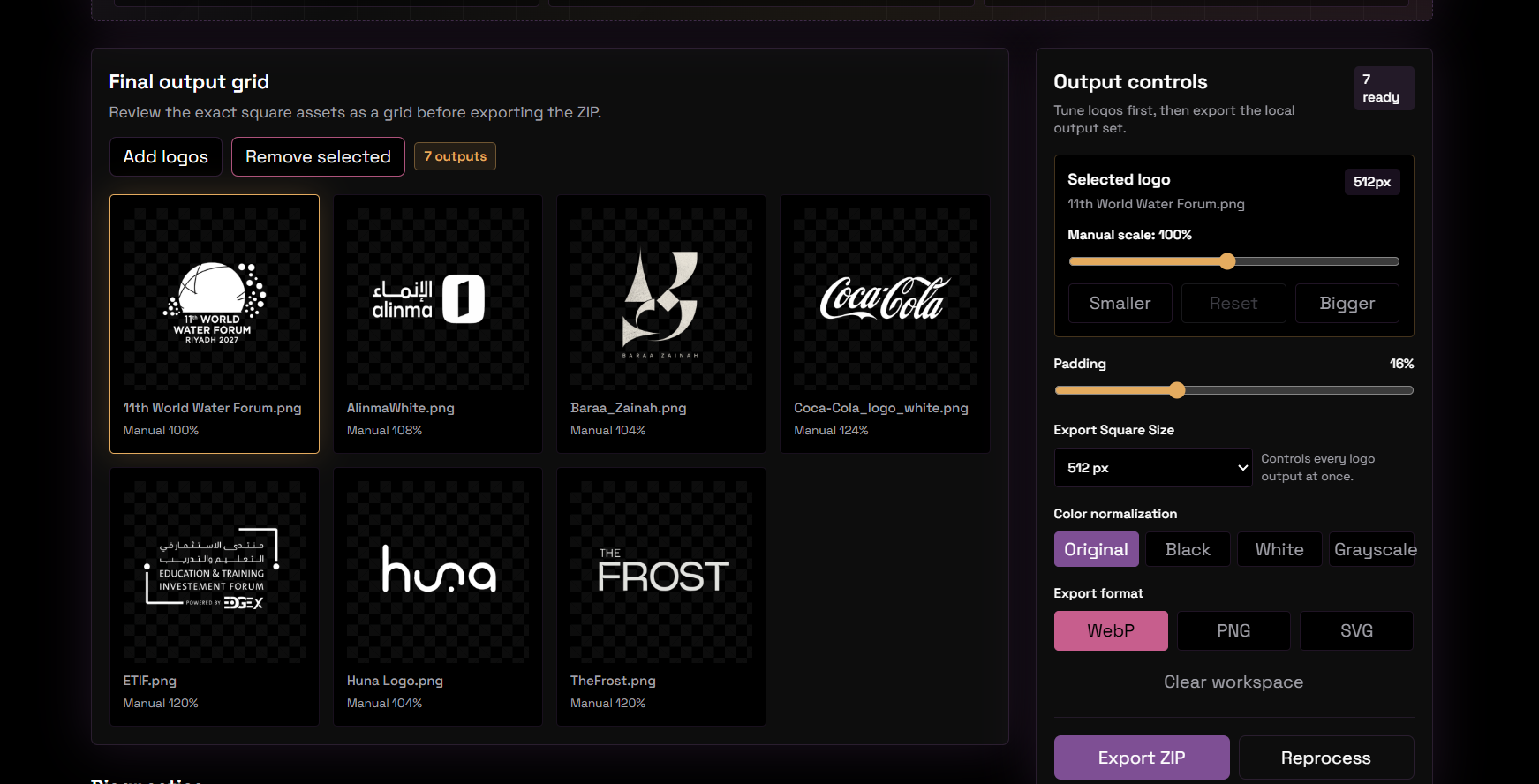
- Grid Generation: The normalized assets are placed onto a uniform grid with customizable padding and backgrounds, ready to export as high-resolution deployment assets.
Why I Open-Sourced It
I believe that true innovation in event technology comes from solving shared friction points. By open-sourcing BrandFit, my goal is to give back to the global developer and design community, providing a reliable tool that eliminates one of the most frustrating bottlenecks in our industry. Whether you are an event manager in Riyadh or a front-end developer worldwide, this tool is yours to use, fork, and integrate into your own registration portals.
بصفتي مصمم ومطور أنظمة أعمل بشكل مكثف في قطاع تقنيات الفعاليات، لاحظت عقبة متكررة تستنزف الوقت في كل مشروع: إدارة شعارات الرعاة. تطلب شعاراً بخلفية شفافة (PNG)، فتتلقى صورة منخفضة الدقة (JPEG) بهوامش بيضاء ضخمة. يهدر المصممون ومنظمو الفعاليات ساعات طويلة في تعديل وقص ومحاذاة هذه الأصول يدوياً، لضمان ألا يبدو شعار أحد الرعاة أكبر من الآخر لمجرد اختلاف أبعاده. لقد سئمت من رؤية فرق العمل تهدر وقتها الثمين في هذه المهمة المتكررة. لذلك، قمت ببناء حل آلي وموثوق لمعالجتها جذرياً. أداة BrandFit هي أداة متصفح مفتوحة المصدر تعمل على جهاز المستخدم (Client-side)، وتقوم تلقائياً بقص الهوامش البيضاء، وتوحيد الوزن البصري، وتصدير شبكات شعارات رعاة نظيفة ومحاذاة بدقة.
مشكلة المحاذاة الرياضية مقابل المحاذاة البصرية
إذا أخذت شعاراً مربعاً وشعاراً مستطيلاً وجعلتهما بنفس الارتفاع برمجياً، سيبدوان غير متوازنين تماماً للعين البشرية. يحل المصممون هذه المشكلة عن طريق تغيير الحجم بناءً على الوزن البصري - أي تعديل الكتلة المُدركة للشعار ليبدو متناسقاً بجانب الشعارات الأخرى. أتمتة هذه العملية معقدة؛ إذ يجب تحليل كثافة البكسلات في الصورة، والعثور على الحواف الحقيقية (مع تجاهل الهوامش الشفافة أو البيضاء)، ثم تغيير الحجم بناءً على المساحة وليس فقط الأبعاد الخارجية.
الحل: محرك آمن يعمل على متصفح العميل
كنت بحاجة إلى بناء هيكل برمجي فوري وموثوق وآمن. يتعامل منظمو الفعاليات غالباً مع أصول علامات تجارية سرية أو لم يتم إطلاقها بعد، لذا فإن رفعها إلى خوادم خارجية لم يكن خياراً مطروحاً. قمت بهندسة BrandFit باستخدام تقنية HTML5 <canvas> لمعالجة الصور مباشرة داخل المتصفح. لا توجد أي عمليات رفع على خوادم أو اعتمادات سحابية. هذا يضمن الخصوصية التامة للبيانات وسرعة معالجة فائقة لمجموعات ضخمة من الشعارات.
لماذا جعلتها مفتوحة المصدر؟
أؤمن بأن الابتكار الحقيقي في تقنيات الفعاليات ينبع من حل المشكلات المشتركة. من خلال جعل BrandFit مفتوح المصدر، هدفي هو المساهمة في مجتمع المطورين والمصممين العالمي، وتقديم أداة موثوقة تقضي على أحد أكثر المهام إزعاجاً في صناعتنا. سواء كنت مدير فعاليات في الرياض أو مطور واجهات أمامية في أي مكان في العالم، هذه الأداة متاحة لك لاستخدامها وتطويرها ودمجها في منصاتك الخاصة.